Academia is panicking. And if you hold some form of a teaching career, you already know why.
While there is huge debate on the relevance of academia at this point in our history, I believe it is still one of the best springboards for social growth. Education, be it theoretical, practical, or accidental should be considered valuable.
Formal education breeds the environment to teach you values like being on time, teamwork, and excellence, while helping you understand and master the forces that make the world go round.
But there isn’t one way to learn anymore. School used to be the best way. But the hustle culture brought in self-learning through Youtube and online courses. Now, you can build an 8-figure business in less than 10 years without needing a high school diploma.
Even with the rise of online learning, social media, and virtual reality, academic curricula haven’t changed much. And therein lies the core of the problem now that a brand new disruptor has arrived: AI.
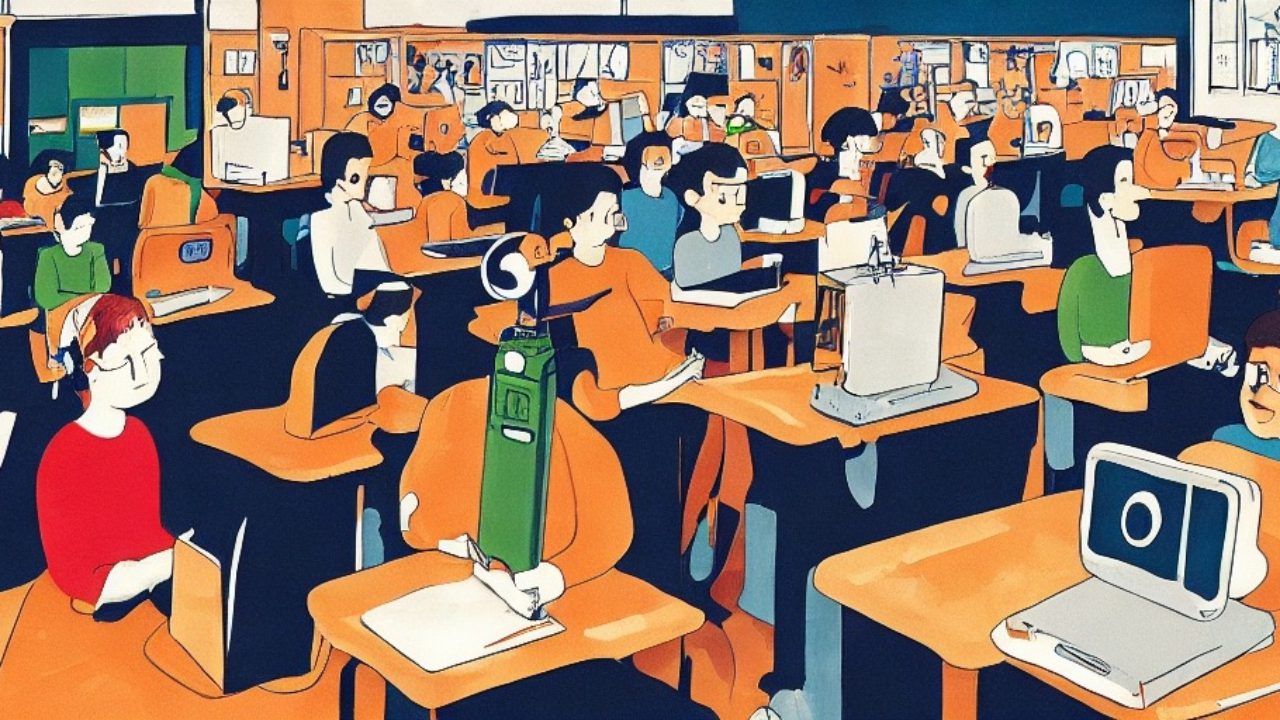
Google “School ChatGPT” and you’ll find dozens of articles about this AI tool being banned in schools. ChatGPT has become every student’s invisible tutor, except this time, your tutor has mastered every single subject, has the answers to even the most complex questions, and does all your homework, papers, and presentations for you… within seconds.
With AI now being the preferred learning tool, professors all over the world are asking, “how in the world do we stop this?”
As a digital educator, course creator, and content strategist, I feel the friction. But here’s why I’m not writing it off.
Do you really want to stop it, though?
Truth of it is that you can try. But then you’ll find yourself an irrelevant player in your industry, much like any business that has failed to adapt.
I was lucky. I was a new student at the College of Saint Benilde (CSB) in 2007. Right in the heart of Metro Manila, I found myself in an unconventional learning environment where technology was embraced. And what a time to uphold this ethos too, as it was in the early days of Facebook and social media as a whole.
Our professors at CSB joined us in creating Facebook Groups and having healthy online debates and discussions over the platform. Multiply.com was still a thing, and some professors reviewed and commented on your class-related essays. Social Sciences put our online storytelling to the test by having us upload our amateur documentaries on Youtube.
This was all new then. But apart from the fascination with the new and advanced, it was refreshing to learn that the institution embraced the technology its students were growing up with. Because of this, learning wasn’t confined in classrooms, we brought it home. We brought it online. We were inspired to keep learning outside of school.
2023, however, presents AI as a much more powerful disruption in learning, and in practically every industry. In the end, my commitment is to help my student make it out there. How am I supposed to do that when my course of action is to virtually ram their heads in the sand?

Is AI the next victim of cancel culture?
The New York Post emphatically writes, “Welcome to the new age of academic dishonesty” in this December 2022 article.
One college professor said that he “caught” a student cheating on a paper because the writing seemed rudimentary and obvious, like a smart 12th grader wrote it. Eventually, the college student admitted to using ChatGPT and failed his Philosophy class.
There have been and will be many more of these scenarios playing out. While there might’ve been some house rules broken, the emergence of “cheating with AI” amongst students forces us to reflect: Maybe it’s about time we stop punishing the youth for using technology they’re growing up with and finally find a way to work with them instead.
It’s synonymous to rejecting something you simply don’t understand. Like the internet. We haven’t had a scarcity of intelligence since the search engine and Copy-Paste. I highly doubt we’d experience it now.
So what warrants the abject terror? Anything ChatGPT writes is original, so it’s not plagiarism. The professors in the article argue that the submissions are fraudulent. If the output aligns with the student’s ideas and thoughts anyway, is that fraudulent?
Of course, you could ask: “How does the student even know what his thoughts are? There was barely any time to think!” Yes, the most shocking thing about AI is the instant output. It can produce a ton of intelligent content within seconds, if you know what prompts to use. It works so fast that you barely have time for critical thinking.
But if the absence of critical thinking is the problem, then there isn’t much of a difference from where they started as students: some of them will know how to think critically, and some of them will need help. It is not their responsibility to avoid new advancements in technology. It is, however, our task as educators to adjust so we can keep teaching them relevant skills.
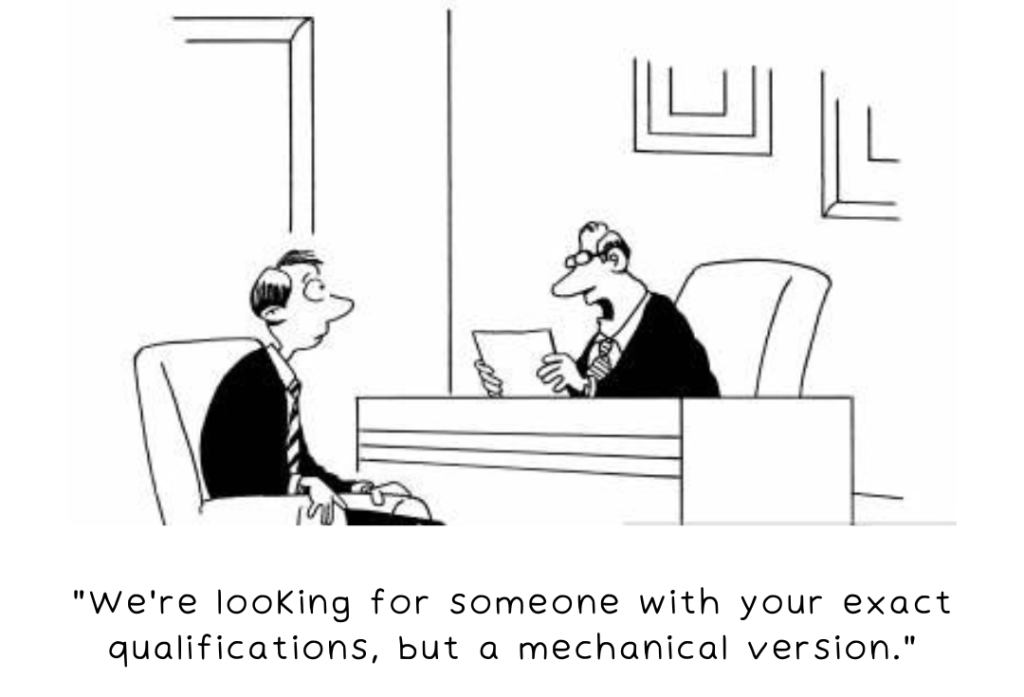
Artificial Intelligence doesn’t replace human skill – it creates new ones.
Technology has never hindered talent. It amplifies it, and creates new spaces for opportunity, for intelligence, for work.
The invention of the typewriter didn’t stop people from learning how to write, and instead, allowed more poets and authors to surface. The invention of electricity didn’t overshadow the appeal of the outdoors, instead it made access more possible through battery-powered vehicles. The rise of auto-tune almost rocked the music world, but it never replaced iconic voices, in fact, I’m pretty sure the whole thing backfired on itself.
You might argue that AI is a different animal. It is, just like every piece of technology that came before it was. While advancements never stopped people from being good, it does create the opportunity to fake real talent. ChatGPT will eventually make it difficult to figure out whether your favorite novelist is actually a good writer. Or if the screenwriter you’ve always idolized truly had original ideas. Or if I actually wrote this essay myself. (On that, you’ll just have to trust me)
What AI is good at is replacing redundancies. But while it does that, it will also give birth to different industries that require brand new skill sets, and alternatively, reinvent the way your current skills are applied. The rise of a new Silicon Valley. The strengthening of the blockchain. Decentralization. This is the tech our kids are growing up with. And if past is predictor, we can’t do much when it’s gone through mass adoption.
AI learns. It argues. It adapts. But so do we. As educators, let’s teach ourselves how to elevate our own teaching styles and adapt to the technology in front of us.
I don’t think people should be worried for the long-term because real world experience will always weed the fakers out.
If you’re faking skills-wise, AI only buys you time before you’re found out. And make no mistake, you WILL be found out, just as life always reveals who had the street smarts all along.

A chance to teach for the real world.
I just finished watching “Inside Man” on Netflix. On the 4th episode, Janice Fife (Dolly Wells), a math tutor, makes a fine argument about the practicality of understanding Maths to her lazy teenage student. She insists that his lazyness is precisely the reason why he should be good at math:
“Hard workers are only good at filling up their days. Lazy people look for shortcuts. 90% of human inventiveness is an attempt to have more time off and somewhere to sit. Without laziness we’d all be working the fields.”
Granted, her student wasn’t using ChatGPT to solve problems. But she makes a good point: Good things come to those who find shortcuts.
Take that with a grain of salt. But before AI started taking over learning, there never was an argument about needing to update theoretical teaching. Theory helps you understand. But understanding is only the first half of learning. Application is the other.
I contend that the biggest reason why academia pushes back on AI is because it forces teachers to change their teaching styles.
Now an AI tool like ChatGPT could help a student breeze through an essay homework or even get awarded for writing a full thesis on the Effect of Taxation in Economic Development. You hope they’d read it and maybe understand what they just submitted. But because we’re only teaching theories, we aren’t really equipping them with the shortcuts that will actually help them in life.
So students get on with bookish memorization of tax theories, they graduate, and forget all about theory. Then when they’re asked to file taxes, they wish they were taught how. Can you hear the chanting now? “The educational system has failed us!”
So how do you teach without AI getting in the way? Kinda controversial, but I say USE IT.
Now hear me out. Before you protest against this adjustment, understand that in the end, students will be working hard too.
So your student uses ChatGPT to write essays. Ask them to defend it verbally. They used AI in their Physics homework? Ask them to apply their solution to help Formula One drivers avoid accidents. They’re trying to explain Art History? Take a virtual museum tour on Zoom and ask them to apply their theoretical learning by deconstructing the art in front of them (or on their screens). Heck ask them to write a full thesis on AI’s impact in their industry. Let them have their own opinion.

The question AI is forcing teachers to reflect on is this: how is your teaching style equipping your student so that they can be relevant and successful in the real world?
It’s unfair to ask my students to be creative when I avoid it altogether as the teacher. AI doesn’t compete with me as an educator. It shows me a how to be a better one.
“The technology you use impresses no one. The experience you create with it is everything.” -Sean Gerety