“Mainstream news” is undergoing a seismic redefinition. Legacy media, once the towering gatekeeper of news and culture, is ceding ground to the decentralized rise of what Elon Musk calls the “new media.”
When Joe Rogan’s almost three-hour podcast interview with President-elect Donald Trump attracted 26 million views in a single day, it became the clearest signal yet of a changing tide. Trump’s win in the 2024 elections further proved the power of podcasts, so much so that the masses have coined this event, “The Podcast Election.”
Long-form content never died, but when social media giants like Meta and Tiktok pushed ephemeral content and only rewarded stories and reels with reach and engagement, it didn’t take too long until every content creator preached “short-form is the way to go!” All your knowledge as an industry professional had to be distilled into 30-second explainer videos, edited with trending music. Still, there came signs that people wanted a little more depth in their content. For example, in early 2024, Meta allowed longer videos (up to 3 minutes) to be uploaded as reels, and extended the limit of Instagram stories from 15 seconds to 60 seconds.
You can hardly call 3 minutes “short-form” anymore, which inspires a curious question, is long-form in again?
A strong argument can be made for it: Podcasts and live streams have grown in reach over the past year, with the number of podcast listeners worldwide reaching 546.7 million in 2024. Video podcasts became more popular, with some platforms reporting a 39% year-over-year increase in average daily streams in the first quarter of 2024. Gen Z listeners are experiencing the most rapid growth and are expected to overtake millennials as the largest generation of podcast listeners by 2027. Podcasts have become the preferred source of entertainment and news as the medium now dominates the space where TV networks and print newspapers once thrived. But why is this happening? Take a closer look and you might find that it isn’t merely about technology outpacing tradition, but about trust.
For years, social media has been demonstrating that authenticity outweighs polish. That reality has now caught up with the legacy media. “Misinformation” became the buzzword of the year as audiences increasingly grew more sophisticated in how they validate the information they receive. Soundbites used to be great, but now, people want the hard questions answered. It’s the kind of thirst that mainstream media simply couldn’t quench.
So, if you can’t trust mainstream media, where do you turn? It appears that the masses have taken it upon themselves to obtain the truth, led by the world’s biggest podcasters. The new media presents a reckoning—and we’re only beginning to understand its reach.

Legacy media’s existential crisis
Both President-elect Trump and Vice President Kamala Harris largely bypassed traditional news outlets during the presidential race, instead granting unprecedented access to podcasters, streamers, and social media personalities who exerted enormous influence in shaping the results of the 2024 campaign.
“That a president-elect could win so overwhelmingly in popular vote + electoral college while ignoring The New York Times, Washington Post, NPR, CBS News, NBC News, & CNN (while spending hours with Joe Rogan) should be a moment of self-reflective reckoning for ‘mainstream’ media,” wrote Michael Socolow, the University of Maine’s professor of journalism.
“All of us have to come to grips, the legacy media is just not as important as it thinks it is,” Axios CEO Jim VandeHei said on MSNBC.
Well, at least they’re self-aware.
The crumbling fortress that used to be legacy media’s unbeatable reputation, now has walls riddled with cracks, and the battering ram is public skepticism. People are disillusioned. Trust – once the cornerstone of traditional outlets – has eroded, as people question whether the news they consume is unbiased or manipulated. Allegations of censorship and bias have only deepened the divide. High-profile incidents, such as the suppression of the Hunter Biden laptop story and revelations about shadowbanning dissenting voices on social platforms, have made the public wary. Instead of feeling informed, many feel filtered, and the lies have become impossible to ignore. Even worse, when reporters fulfill their moral and professional obligation to tell the full truth too often, they get fired. The closer you get to uncomfortable truths, the more you are threatened by entrenched powers.
The fallout is evident in the numbers, too. Mainstream news channels are experiencing a steady decline in viewership. Print media is faring no better, with major outlets struggling to stay afloat as subscriptions dwindle. Even venerable institutions like Time Magazine are considering sales – a stark contrast to the days when their brand was synonymous with credibility and influence.
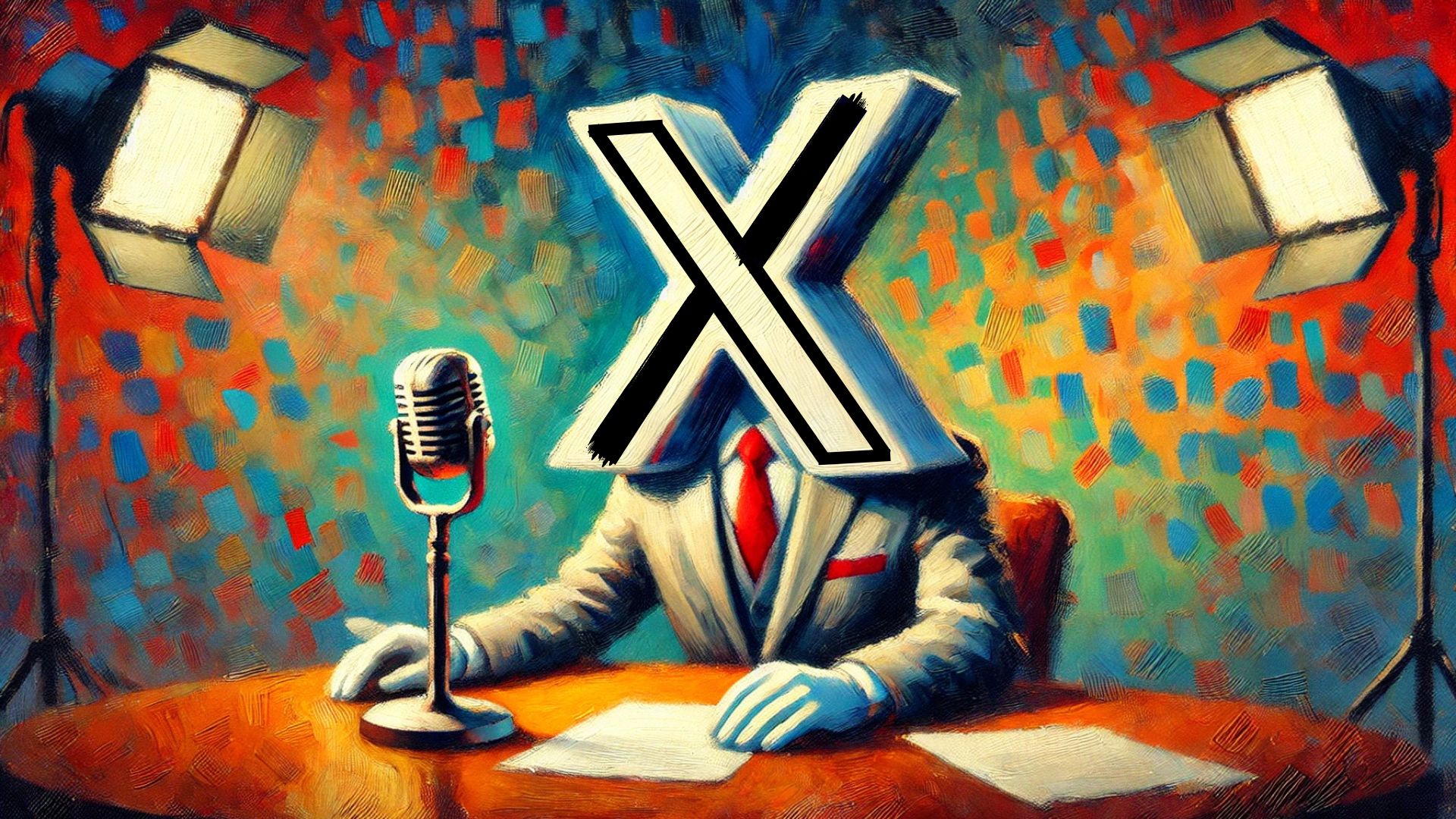
Meanwhile, audiences are migrating to platforms like X (formerly Twitter), which has transformed itself into an influential center for political discourse. Unlike traditional media, X offers a new model for news: unfiltered access to real-time information, direct access to key players, and lightning-quick commentary, often from people directly involved in the events. It’s the democratization of news, where the collective voice of millions shapes the narrative, not a handful of editors behind corporate desks.
For a generation raised on immediacy and transparency, waiting for the six o’clock broadcast or flipping through a newspaper or magazine feels antiquated. Now, if you want the latest news, just refresh your feed on X.
When the polls showed victory for Trump, with election results closely reflecting the public sentiment expressed on X, legacy media had a rude awakening.

Legacy media, once seen as the arbiter of truth, now faces an existential crisis. People don’t want news reporting anymore. They want to listen to conversations that matter; discussions that go beyond bounds that mainstream media wouldn’t cross. Audiences demand transparency, authenticity, and access—and they’re finding it elsewhere.
The newfound power of podcasts

To ignore Joe Rogan is to commit career suicide. Imagine that. Now, Rogan is by no means a political savant, but he represents a band of podcasters that have cracked the code in getting an important message across.
Unlike the soundbite-driven, highly curated narratives of traditional outlets, podcasts thrive on long-form conversations. When the besties of the All In Podcast press a guest for clarity or Lex Fridman lets silence linger to pull out a thoughtful answer, it’s a level of depth that headline-chasing outlets can’t replicate. These sprawling discussions offer unfiltered insight, and there’s little room to hide behind talking points. This is probably why Vice President Harris was very restrictive about the podcasts she showed up for.
Call it principle if you must, but for those that believe that this was indeed The Podcast Election, ignoring the most influential podcasts tops the list of missteps that cost Harris the presidency. As New York Times editor Willy Staley writes on X, there is now palpable “soul-searching among Democrats about the podcast situation.”
The prompt for collective self-reflection is well-founded. Millions tuned in to livestreams hosted by prominent podcasters to watch the election results unfold, including Tucker Carlson’s broadcast from Mar-a-Lago, which featured Donald Trump Jr. and Eric Trump as guests. The Trump campaign’s podcast strategy, reportedly spearheaded by Barron Trump, drew significant attention. This included high-profile interviews with big industry leaders. Trump capitalized on these opportunities, as he engaged in lengthy, conversational interviews that reached massive audiences. With Trump’s Joe Rogan interview coming out a week and a half before election day, many analysts contend that this was the very move that sealed the President-elect’s victory.
Perhaps not surprisingly, the biggest impact came from the younger generations. Quite interesting given their propensity to tune out within seconds. But why the growing interest in long-form? Aside from podcasts’ easily consumable format, Gen Z simply trusts it more.
For this generation, the long-form approach resonates deeply—61% of Gen Z podcast listeners turn to the medium to stay informed about social issues. While it is true that every generation has their cultural zeitgeist, and for this generation it’s podcasts, surveys show that it’s more than just being hip. Among the top reasons Gen Z trusts podcasts more than news sources are authentic conversations, diverse perspectives, and having an immersive experience. They no longer want an echo chamber of news anchors spewing the same talking points and catchphrases in unison.
Audiences crave connection and authenticity. Podcasts, if done right, go microscopic on a person’s ideas. Want to get to know someone better? Give them one hour behind the studio mic. But what’s different about the re-emergence of podcasts this time is that it co-exists perfectly with short-form commentary (think X posts and Tiktok reporting – before the latter was banned). Beyond the trendy format, the real power of this content combo comes in shaping not just our listening preferences, but public discourse itself.

News for the people, by the people
Podcasters aren’t all journalists, but they’re doing the kind of journalism people need.
Independent podcasters are only accountable to one group: their audience. This freedom allows them to ask the tough questions that mainstream journalists often can’t, or won’t. It’s the kind of transparency people need, and it’s why podcasts have become trusted sources for unpacking everything from politics to pop culture.
The rise of citizen journalism represents a profound shift in how news is created, shared, and consumed. No longer confined to the filtered narratives of legacy media, the public now takes an active role in documenting and analyzing events. X has led the charge here as it became a hotbed for the rise of citizen journalism, with 65% of users citing news consumption as a primary reason for their engagement. Half of X users report regularly getting their news directly from the platform, bypassing traditional outlets entirely.
This democratization of news reflects a deeper philosophy: the belief that the truth belongs to everyone, not just a select few. Citizen journalism thrives because it removes the gatekeepers. When someone live-streams a protest, shares real-time footage of a natural disaster, or posts first-hand accounts of political unrest, the barriers between events and the audience disappear.
Musk encapsulates this movement well:

But what about misinformation?
In the era of the new media, who polices this? It’s a hot button topic among MSM purists, what with their flawless fact checking:

Legacy media’s credibility has been eroded by a pattern of opacity and selective storytelling. The lack of transparency in covering issues like drone warfare or the origins of the LA wildfires has only fueled public disillusionment. And when mainstream media editorializes their reporting, how credible does that make their fact checkers?

This is the inherent charm of the new media, that while you can expect the unvarnished truth, you are also invited to challenge it. The mission to seek truth is shared by the creator with his audience. X implements this through Community Notes, a system where contributors can add context such as fact-checks under a post, image or video. This community-driven content moderation program is designed to offer helpful and crowd-sourced information. Notes are applied to potentially misleading content based on an algorithm that requires agreement from users across the political spectrum, rather than relying solely on majority rule. The system has worked so well that, just recently, Mark Zuckerberg announced that they will be implementing a similar system on Meta.
Being able to call out misinformation so publicly and so efficiently has become the standard in factual reporting, and it signals a cultural awakening, where the pursuit of truth is no longer a passive act but an active, collective effort.
Recommended Reading
A challenge to do right by the public
Citizen journalism, paired with the educational reach of podcasts, represents a societal shift that empowers people to understand events deeply and take action. Creators, however, need to adhere to a higher level of responsible journalism, especially in light of their growing reach and the lack of oversight.
The very freedom that allows podcasters to explore taboo topics and challenge mainstream narratives can also lead to unchecked claims and echo chambers. Without the guardrails of traditional editorial oversight, there’s a fine line between offering unfiltered perspectives and amplifying divisive rhetoric.
On the flipside, audiences have only become much more sophisticated over time. Even with the emergence of high-quality, AI-generated content, people can tell when they’re being lied to, and they’ve grown comfortable in voicing contrarian opinions. So there might not be much to worry about in the case of unchecked reporting – the people will let you know when you’ve got it wrong, and they will let you know fast. Still, this is a very delicate symbiosis. If the new media is to fulfill its mission to unite the world in truth, creators have a responsibility to do right by their audiences, and the public needs to continue holding these creators to a high moral standard.
For podcasts and citizen journalism to remain credible, creators must prioritize unbiased fact-checking, ethical reporting, and balanced storytelling, or risk eroding the trust they’ve built with audiences.
Risks in mind, the dominance of the new media reflects a collective desire for authenticity, depth, and autonomy in content consumption. Provided this body of content creators-turned-reporters observe the very core values that earned the people’s trust, they’ll not only influence discourse, but eventually also form new political power.
In today’s volatile socio-political climate, to be on the side of truth is to be on the side of danger. As we usher in the era of the new media, as well as a highly-scrutinized chapter in the US presidency, it’s safe to say that we’ve much more truth to uncover. It will take fearlessness. The objective truth may have been elusive for the longest time, but so far, this is the closest we’ve ever gotten to it. ◆
Enjoyed this? Share with a friend.

Sixteen Ramos
Sixteen is an author, content strategist, and brand storyteller who writes about a variety of topics including A.I., online business, sales psychology, culture, and history. As the creator of The StorySelling Masterclass, she helps business owners tell compelling brand stories through content.
Sixteen Ramos
Sixteen is an author, content strategist, and brand storyteller who writes about a variety of topics including A.I., online business, sales psychology, culture, and history. As the creator of The StorySelling Masterclass, she helps business owners tell compelling brand stories through content.