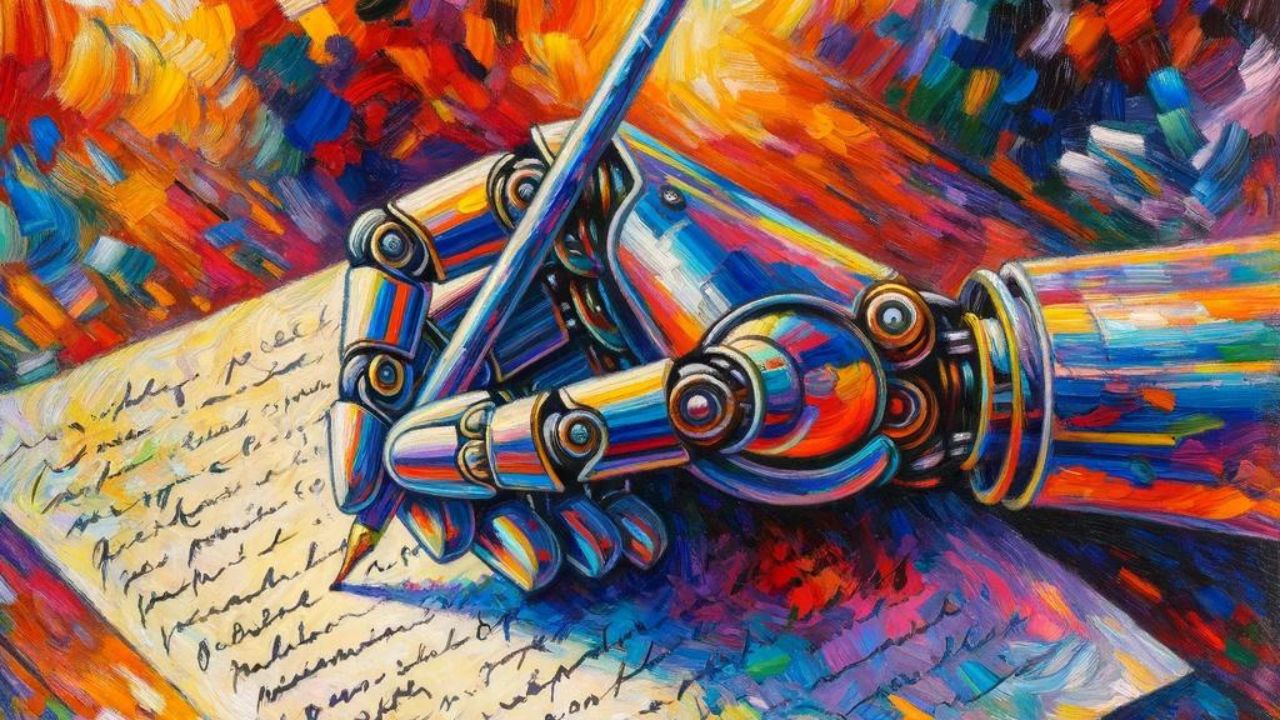
With around 10% of all internet content now being A.I.-generated, the question on many lips is whether the art of writing, once purely human, loses its soul when typed out by an algorithm. Does A.I. writing always equal bad quality writing? Is an A.I.-written article doomed to be a shadow of what a human can produce, lacking the nuance, depth, and emotional connection that come from years of lived experience and cultural immersion? While people want to believe that, recent findings suggest a complex reality.
A meta-analysis reveals that while most readers couldn’t distinguish between articles written by humans and those generated by A.I., human-written news held a slight edge in quality and a substantial advantage in readability that wasn’t present in A.I.-generated pieces – a certain je ne sais quoi that didn’t resonate as deeply. For example, while being impressively accurate and informative, A.I.-written articles often miss the mark on humor, failing to capture the subtle nuances that make a piece truly engaging. At least that’s what happens most of the time. But A.I. is becoming increasingly – and exceptionally – good at producing fresh, insightful, and opinionated content from a single prompt that most people can’t tell the difference between human and A.I.-written content, with research revealing that people actually prefer A.I. writing to human writing.
So the challenge is becoming more of a perception problem than a quality problem. Nieman Journalism Lab reports that readers perceive news organizations publishing stories labeled as AI-generated as less trustworthy, giving A.I.-generated articles a bad rap.
It’s a complicated co-existence, but with the prospect of improved productivity, profit, and performance, is it worth exploring a middle ground with A.I.?

Bad A.I. content exists, but that’s a reflection of the skill level of the human trying to produce it.
At the core of A.I. writing tech like ChatGPT is a sophisticated mesh of algorithms and machine learning models. They have remarkable capabilities, from mimicking human writing styles to generating content that is not just coherent but also richly informative and engaging.
In the case of ChatGPT, you have unparalleled speed and the ability to sift through and process massive datasets, making it an indispensable tool for producing data-driven articles, comprehensive reports, and timely summaries. And if you have a global audience, its ability to operate in multiple languages opens up new avenues for content creation, transcending the limitations often faced by human writers.
The use cases are plenty: the creation of realistic dialogues for chatbots, the drafting of imaginative fiction, the writing of news scripts, the formulation of detailed reports on intricate subjects such as finance and science… but A.I. doesn’t do it all on its own. A human still needs to talk to it.
This brings us to an important aspect of working with A.I.: the art of prompting. The quality of output from an A.I. largely depends on the input it receives. In other words, bad A.I. content is often a reflection of the prompts you give it.
Effective prompting involves understanding how to communicate with A.I. to guide it toward producing the desired outcome. This doesn’t just mean asking the right questions but also framing them in a way that directs the AI’s vast knowledge and analytical capabilities towards a specific goal.
For example, instead of asking an A.I. to “write an article on climate change,” a more effective prompt would involve specificity and context, such as “write a 1000-word informative article on the impact of climate change on Arctic biodiversity, incorporating recent research findings.” Such detailed prompting can significantly enhance the relevance, depth, and quality of the AI-generated content.
On its own, A.I. can produce good content. But it’s only with context, some level of human oversight, and a solid knowledge of the topic does it make exceptionally brilliant written content, which makes you, the human and the expert, crucial in the creative process.
Recommended Reading

This is the worst A.I. is going to be
Despite its advancements, A.I. writing is not without its flaws. But it’s essential to recognize that what we see today is merely the starting point.
Consider the transition from the early, rigid chatbots to today’s A.I., which can engage in surprisingly nuanced conversations. This evolution hints at the future capabilities of A.I. in writing.
Projects are already underway aiming to enhance A.I.’s ability to understand and replicate the myriad human emotions and experiences in writing, suggesting that the gap between AI-generated and human-written content is narrowing.
As technology evolves, so too will A.I.’s ability to mimic human writing more accurately. By the end of this year, we’re looking at a future where A.I. can write in any voice and tone, with the law being its only limitation.
Speaking of the law…
The ethical and practical considerations of A.I. are not to be taken lightly. As A.I. becomes more integrated into content creation, concerns over authenticity, originality, and misinformation have surfaced, especially in news reporting and academia as professors continue to ban ChatGPT in schools. The potential for A.I. to generate biased or false information is a pressing issue, to say the least.
At the heart of these considerations is the principle that intention is everything. As we stand on the cusp of a new era where A.I. holds the potential to revolutionize profit-making, garner attention, and offer various commodities in the digital marketing sphere, the onus is on us to wield this power responsibly. The essence of intentionality in using A.I. speaks to a broader ethical commitment to harnessing technology in ways that enhance societal value without compromising moral principles.

A.I.-assisted content does not eradicate the value of the human touch.
Despite the impressive capabilities of A.I., the human element remains irreplaceable. Human editing and oversight are crucial in shaping A.I.-generated content into pieces that are not only accurate and coherent but also engaging and relatable. Successful human-A.I. collaborations have demonstrated that the best content often comes from a synergy of A.I. efficiency and human creativity and insight.
The future of writing does not need to be an either/or scenario. It can be a collaborative one, where A.I.’s capabilities are harnessed to complement and augment human creativity and insight. The fear that A.I. might replace virtually all jobs is not unfounded, but as A.I. replaces current jobs, it will also create new opportunities for growth. And if we are to future-proof ourselves in the reign of A.I. innovation, we’d do well to explore those opportunities early on. 𖠑
Enjoyed this? Share with a friend.

Sixteen Ramos
Sixteen is an author, content strategist, and brand storyteller who writes about a variety of topics including A.I., online business, sales psychology, culture, and history. As the creator of The StorySelling Masterclass, she helps business owners tell compelling brand stories through content.
Sixteen Ramos
Sixteen is an author, content strategist, and brand storyteller who writes about a variety of topics including A.I., online business, sales psychology, culture, and history. As the creator of The StorySelling Masterclass, she helps business owners tell compelling brand stories through content.